Welcome, fellow creators and dark academia enthusiasts, to the definitive masterclass in Minecraft gothic landscaping and agricultural design. If you are looking to elevate your survival world, SMP server plot, or creative megabuild beyond the standard wooden square boxes and bright green lawns, you have arrived at the right sanctuary.
Gothic architecture thrives on drama, verticality, contrasting shadows, intricate ironwork, and an air of timeless, moody romance. When combined with farming and agriculture, gothic design transforms mundane food production into an atmospheric masterpiece. Imagine harvesting sweet berries beneath towering blackstone buttresses, tending to glowing crop terraces surrounded by wrought-iron fences, and watching lanterns flicker across rain-slicked deepslate pathways.
In this comprehensive guide, we explore 20 Fence Minecraft Farm Ideas. Every single concept has been meticulously crafted to be Pinterest-friendly, visually striking, and functionally immersive. For each idea, you will discover an in-depth breakdown covering the atmospheric introduction, the core concept meaning, a step-by-step construction guide, professional styling tips, design variations, and a complete material checklist.
Prepare your pickaxes, ready your dark color palettes, and let us delve into the shadows of architectural farming.
1. The Obsidian-Trimmed Blackberry Orchard
Introduction
There is an unmistakable elegance in the sharp contrast between midnight-black stone and the vibrant, ruby-red clusters of sweet berries. The Obsidian-Trimmed Blackberry Orchard merges the austere geometry of gothic fortifications with a secluded, aristocratic fruit grove. Designed for players who appreciate moody sophistication, this farm provides both an abundant food source and an arresting visual landmark for your estate’s outer courtyards.
What This Idea Means
This concept represents the juxtaposition of untamed nature and strict architectural control. In gothic design, nature is rarely allowed to grow wildly; instead, it is framed, restrained, and elevated by human craftsmanship. The blackberry bushes (represented by sweet berry bushes in Minecraft) are corralled behind ornate iron fences and anchored by polished deepslate and obsidian pillars, creating a fortified agricultural enclosure fit for a medieval manor.
How to Make It
- Lay the Foundations: Outline a 13×13 square using Polished Deepslate Bricks. Dig out a 1-block-deep trench along the inner perimeter for your planting beds.
- Erect the Pillars: At each of the four corners, build vertical columns 5 blocks high using Polished Blackstone Bricks, capped with an inverted Polished Blackstone Stairs motif.
- Install the Gothic Fencing: Between the corner pillars, string continuous lines of Iron Bars to form the primary security barrier. Inset weeping vines from the upper corners to drape downward.
- Planting and Hydration: Fill the interior trench with coarse dirt and plant Sweet Berry Bushes. Place hidden light sources beneath carpets or behind stairs to prevent mob spawns while maintaining deep shadows.
- The Archway Entrance: Construct a pointed gothic arch at the front entryway using Deepslate Brick Stairs and slabs, flanked by hanging lanterns on chains.
Tips and Variations
- Variation: Substitute deepslate with Crying Obsidian accents for a magical, ethereal purple glow during nighttime hours.
- Tip: Ensure you wear leather boots when harvesting to avoid taking damage from the mature blackberry bushes.
Materials Needed
- Polished Deepslate Bricks (64)
- Polished Blackstone Bricks (32)
- Iron Bars (48)
- Sweet Berry Bushes (16)
- Coarse Dirt (16)
- Iron Chains & Lanterns (4 pairs)
- Weeping Vines (8)
2. The Victorian Wrought-Iron Greenhouse Farm
Introduction
The Victorian era brought an obsession with botanical preservation encased in magnificent glass and iron structures. The Victorian Wrought-Iron Greenhouse Farm brings this opulent aesthetic into Minecraft, utilizing tinted glass, dark spruce framing, and intricate iron fencing to cultivate delicate crops in a climate-controlled sanctuary that looks straight out of a gothic ghost story.
What This Idea Means
This farm symbolizes the human desire to master and study nature within enclosed, cathedral-like geometries. It evokes laboratories of alchemists and botanical gardens of eccentric nobility, where rare herbs and crops are nurtured under arched glass roofs regardless of the harsh weather outside.
How to Make It
- Structure Shell: Build a rectangular hall measuring 9 blocks wide by 15 blocks long. Use Stripped Spruce Wood for the primary vertical supports and horizontal beams.
- Glass Vaulting: Create a curved barrel roof using Tinted Glass Panes or regular Glass Panes, supported by external buttresses made of Stone Brick Stairs.
- Interior Agricultural Beds: Inside, build tiered wooden planting troughs using Spruce Slabs, filled with rich farmland for carrots, potatoes, and wheat.
- Wrought-Iron Perimeter: Surround the exterior base with a combination of Iron Bars and Cobblestone Walls to simulate heavy wrought-iron estate fencing.
- Atmospheric Lighting: Suspend lanterns from chains at every apex intersection of the greenhouse ceiling.
Tips and Variations
- Variation: Use Tinted Glass for a darker, more dramatic interior that requires interior lighting for crop growth.
- Tip: Integrate composters painted with dark trapdoors to serve as vintage fertilizer bins in the corners.
Materials Needed
- Stripped Spruce Logs (48)
- Spruce Planks & Slabs (64)
- Glass Panes / Tinted Glass (128)
- Iron Bars (64)
- Stone Brick Stairs (32)
- Farmland & Seeds/Crops (30)
- Chains & Lanterns (6)
3. The Midnight Crypt Wheat Terraces
Introduction
Agriculture meets necromancy in this haunting stepped hillside farm. Built into the side of a mountainous biome, the Midnight Crypt Wheat Terraces cascade downward like ancient burial steps, bordered by blackstone retaining walls and gothic iron fences that protect the golden wheat from midnight wanderers.
What This Idea Means
This idea embodies the cycle of life and death, utilizing ground typically reserved for crypts and catacombs to sustain life. It tells a story of ancient monks or reclusive hermits who farmed steep, treacherous slopes using sheer architectural grit and stone masonry.
How to Make It
- Terraced Excavation: Carve four cascading tiers into the side of a stone mountain, each tier being 3 blocks wide and spanning 15 blocks across.
- Retaining Walls: Line the front and sides of each tier with Polished Blackstone Wall blocks.
- Fencing and Boundaries: Install Iron Bars along the outer rim of each terrace to act as safety rails and decorative gothic barriers.
- Irrigation and Crops: Carve a hidden water channel down the center, covered by dark oak trapdoors, and plant golden Wheat across all tiers.
- Crypt Entrance: At the base of the terraces, construct a small stone archway resembling a crypt door to tie the theme together.
Tips and Variations
- Variation: Replace standard wheat with Nether Wart on lower tiers if building in a dark fantasy or nether-themed base.
- Tip: Add scattered mossy cobblestone blocks and skull heads along the edges for an aged, weathered aesthetic.
Materials Needed
- Polished Blackstone Walls (120)
- Iron Bars (80)
- Wheat Seeds & Farmland (60)
- Dark Oak Trapdoors (15)
- Stone Bricks (45)
- Water Buckets (4)
4. The Cursed Raven-Roost Pumpkin Patch
Introduction
Nothing says gothic autumn quite like gnarled dark oak trees, hovering ravens (or crows simulated by black cats/bats), and sprawling orange pumpkins resting on dark, fertile earth. The Cursed Raven-Roost Pumpkin Patch is an atmospheric masterpiece designed around Halloween aesthetics and eerie, timeless folklore.
What This Idea Means
This design captures the essence of rural gothic mystery—the kind of isolated farmstead at the edge of a haunted forest where legends are born. It trades cheerful farming tropes for dramatic shadows, gnarled branches, and stern iron boundaries.
How to Make It
- Boundary Wall: Enclose an 11×11 plot with a rugged fence made of Cobblestone Walls interspersed with Iron Bars and Dark Oak Fences.
- Twisted Trees: Plant 2 Custom Dark Oak Trees in opposite corners, trimming their branches so they lean inward over the patch.
- Pumpkin Placement: Scatter Pumpkins and Jack o’Lanterns naturally across coarse dirt and podzol blocks.
- Scarecrow Effigy: Build a central scarecrow using a Fence Post, a Hay Bale, and a carved pumpkin wearing a leather cap.
- Gothic Gates: Use Nether Brick Fences and Gates for the main entrance to give a charred, ancient look.
Tips and Variations
- Variation: Use Jack o’Lanterns with soul fire torches hidden beneath carpets for an eerie blue-flamed nighttime glow.
- Tip: Plant ferns and dead bushes around the perimeter to enhance the desolate wasteland vibe.
Materials Needed
- Cobblestone Walls (40)
- Iron Bars (20)
- Dark Oak Logs & Leaves (50)
- Pumpkins (14)
- Coarse Dirt & Podzol (60)
- Hay Bales (2)
- Nether Brick Fence (6)
5. The Gothic Cathedral Carrot Sanctuary
Introduction
Elevate standard root vegetable farming into a sacred architectural rite. The Gothic Cathedral Carrot Sanctuary features soaring pointed arches, stained glass window backdrops, flying buttresses, and pristine rows of bright orange carrots shielded by delicate iron lattice fencing.
What This Idea Means
This farm reflects the medieval belief that sustenance is sacred and deserves to be housed in temples matching the grandeur of places of worship. It transforms the humble carrot into a venerated offering grown inside a miniature architectural cathedral.
How to Make It
- Floor Plan: Lay out a rectangular footprint measuring 9×17 blocks using Deepslate Tile blocks.
- Flying Buttresses: Build exterior support arms every 4 blocks along the sides using Blackstone Stairs and Slabs, angling upward toward the roofline.
- Iron Fence Windows: Between the buttresses, construct tall, narrow arched window frames filled with Iron Bars and tinted glass accents.
- Interior Cultivation: Create two parallel water-hydrated carrot beds running the length of the sanctuary, edged with polished stone slabs.
- Vaulted Ceiling: Complete the structure with a soaring cathedral ceiling made of dark stair blocks meeting at a central ridge.
Tips and Variations
- Variation: Use Purple Stained Glass panes in the rear arch to cast colored shadows across the crops during sunset.
- Tip: Place item frames holding golden carrots on the interior pillars as decorative sconces.
Materials Needed
- Deepslate Tiles (100)
- Blackstone Stairs & Slabs (80)
- Iron Bars (64)
- Tinted Glass Panes (32)
- Carrot Crops & Farmland (40)
- Polished Stone Slabs (30)
6. The Moonlit Nether Wart Catacombs
Introduction
For builders who prefer the subterranean and the infernal, the Moonlit Nether Wart Catacombs offer a gothic underground farming complex. Carved deep into basalt deltas or custom stone caverns, this farm uses red nether bricks, soul lanterns, and heavy iron gating to cultivate nether wart in chilling style.
What This Idea Means
This concept represents the dark alchemical laboratories beneath gothic castles. It is where forbidden ingredients are cultivated away from the sunlight, guarded by heavy iron bars and illuminated by the ghostly, cold light of soul fire.
How to Make It
- Cavern Excavation: Dig out a vaulted subterranean chamber 11×11 blocks wide and 6 blocks high. Line the walls with Polished Basalt and Red Nether Bricks.
- Tiered Planting Beds: Build concentric square terraces stepping down toward a central pit, using Soul Soil for the planting medium.
- Gothic Iron Gating: Install Iron Bars around the perimeter of each terrace to create secure containment cells for the nether wart.
- Soul Illumination: Hang Soul Lanterns from iron chains attached to the ceiling arches, casting an eerie turquoise hue over the red crops.
- Vaulted Entrance: Construct a grand staircase leading down into the catacombs, flanked by weeping vines and blackstone walls.
Tips and Variations
- Variation: Incorporate magma blocks beneath surface grates to add bubbling heat effects to the subterranean chamber.
- Tip: Keep lighting minimal to maintain maximum dark gothic atmosphere.
Materials Needed
- Red Nether Bricks (80)
- Polished Basalt (60)
- Soul Soil (35)
- Nether Wart (35)
- Iron Bars (50)
- Soul Chains & Soul Lanterns (8)
7. The Haunted Manor Rose & Beetroot Estate
Introduction
Red roses and crimson beetroot share a deep, blood-red hue that screams gothic romance. The Haunted Manor Rose & Beetroot Estate combines formal garden mazes with high-contrast iron fencing, dark wood gazebos, and brooding floral displays outside a dilapidated manor exterior.
What This Idea Means
This design evokes tales of tragic romance and ancestral estates lost to time. The structured hedges and geometric garden paths contrast with the wild, blood-red flora, creating a narrative of elegance holding back decay.
How to Make It
- Estate Layout: Mark out a sprawling 15×15 garden plot divided into four symmetrical quadrants by stone pathways.
- Hedge & Iron Boundary: Outline the outer perimeter with Leaf Blocks (Dark Oak or Spruce) trimmed to 2 blocks high, interspersed with Iron Bars acting as viewing gates.
- Beetroot Beds: Plant rows of Beetroot in the two front quadrants, bordered by low cobblestone borders.
- Rose Gardens: Plant tall Rose Bushes in the rear quadrants, creating dense, dramatic clusters of crimson flowers.
- Central Gazebo: Build a small hexagonal gothic gazebo in the center using Spruce Fences, dark stairs, and a central flower pot.
Tips and Variations
- Variation: Use Wither Roses instead of regular red roses for a truly dark, necrotic aesthetic (ensure peaceful mode or careful handling).
- Tip: Add cobwebs to the corners of the surrounding estate walls to emphasize the haunted theme.
Materials Needed
- Dark Oak Leaves (100)
- Iron Bars (40)
- Beetroot Seeds & Farmland (30)
- Rose Bushes (16)
- Cobblestone Slabs (50)
- Spruce Fences (24)


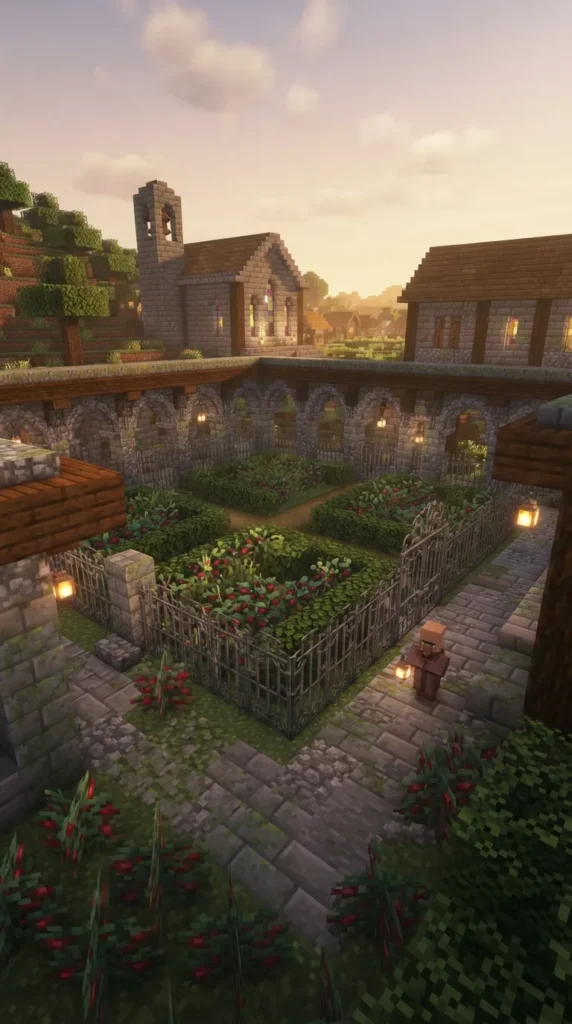
8. The Abandoned Monastery Potato Cloister
Introduction
Monasteries of the medieval world were centers of quiet agriculture and solemn reflection. The Abandoned Monastery Potato Cloister features weathered mossy stone bricks, a serene central courtyard of potatoes, and rusted iron fences that whisper tales of ancient asceticism.
What This Idea Means
This idea explores the beauty of ruination and quiet survival. It represents a sacred order that once tended the earth with meditative precision, leaving behind a tranquil, moss-draped sanctuary where potatoes grow abundantly amidst timeless stone architecture.
How to Make It
- Cloister Arcade: Build a square courtyard 13×13 blocks in size, surrounded by a covered walkway supported by Mossy Stone Brick pillars and pointed arches.
- Central Cultivation: The interior courtyard features a cross-shaped garden bed filled with potato crops, divided by smooth stone paths.
- Iron Cloister Grilles: Replace outer walls with Iron Bars between stone pillars to allow the wind and rain to sweep through the cloister walks.
- Overgrowth: Accentuate the structure with hanging vines, moss blocks, and cracked stone bricks to show age.
- Well of Sorrows: Place a small stone brick well in one corner of the cloister with water and a dangling chain.
Tips and Variations
- Variation: Use Mud Bricks instead of mossy stone for a swamp-monastery aesthetic.
- Tip: Scatter fallen leaves and rooted dirt around the base of the pillars for natural texture.
Materials Needed
- Mossy Stone Bricks (120)
- Cracked Stone Bricks (30)
- Iron Bars (64)
- Potato Crops & Farmland (48)
- Smooth Stone Slabs (40)
- Vines & Moss Blocks (25)
9. The Vampire Castle Vineyard & Grape Trellis
Introduction
Vampire lore is eternally intertwined with vineyards, cellars, and midnight harvests. The Vampire Castle Vineyard & Grape Trellis features towering deepslate walls, arched stone trellises draped with sweet berry vines representing grapes, and iron security gates fit for nobility of the night.
What This Idea Means
This concept represents aristocratic luxury married with dark fantasy tropes. It is a secluded estate where dark lords cultivate their private reserves, blending agricultural perfection with an imposing, fortress-like perimeter.
How to Make It
- Terraced Trellis Frames: Build 4 parallel rows of dark oak arches, 5 blocks tall and 10 blocks long, spaced 2 blocks apart.
- Vine Trailing: Plant Sweet Berry Bushes at the base of each arch and allow vines to cascade over the dark wooden beams to simulate heavy hanging grape clusters.
- Castle Perimeter: Enclose the entire vineyard with a 5-block-high Deepslate Brick wall topped with crenellations and iron fence inserts.
- Stone Pathways: Lay down cracked deepslate tile pathways between the trellis rows for easy harvesting access.
- Wine Press Station: In one corner, set up a brewing stand and cauldrons configured to look like a medieval grape-pressing station.
Tips and Variations
- Variation: Use Glow Berries instead of sweet berries for a magical, bioluminescent vineyard effect at night.
- Tip: Add red carpet runners down the primary pathways for a dramatic gothic flair.
Materials Needed
- Deepslate Bricks (150)
- Dark Oak Fences & Stairs (80)
- Sweet Berry Bushes (32)
- Iron Bars (48)
- Cauldrons & Brewing Stands (4)
- Cracked Deepslate Tiles (40)
10. The Witch’s Hollow Herb & Poison Garden
Introduction
Hidden deep within the dark forest or swamp biome lies the Witch’s Hollow Herb & Poison Garden. Encircled by twisted mangrove roots, mud brick walls, and black iron bars, this esoteric farm cultivates mushrooms, brown mushrooms, nether wart, and medicinal herbs in mysterious bubbling cauldrons.
What This Idea Means
This design celebrates traditional witchcraft, herbalism, and folklore. It honors the healer-outcast who understood the properties of every root, leaf, and fungus, housing her secretive craft within a delightfully dark and gothic enclosure.
How to Make It
- Organic Enclosure: Form a winding, asymmetric enclosure using Mud Bricks and Mangrove Wood logs, roughly 11×11 blocks in diameter.
- Iron Bar Cages: Construct small fenced enclosures within the garden using Iron Bars to quarantine potent or dangerous plants.
- Mushroom & Wart Beds: Plant Brown Mushrooms, Red Mushrooms, and Nether Wart in shaded corners using Podzol and Soul Soil.
- Alchemical Centerpiece: Place a bubbling cauldron on top of a campfire in the direct center of the garden, surrounded by flower pots containing withered flowers.
- Hanging Elements: Hang lanterns from mangrove branches overhead and drape glowing lichen across the stone work.
Tips and Variations
- Variation: Integrate carved pumpkins and item frames with potion bottles to enhance the witchy laboratory vibe.
- Tip: Keep the canopy overhead dense with leaves to ensure perpetual twilight conditions inside the garden.
Materials Needed
- Mud Bricks (60)
- Mangrove Logs (40)
- Iron Bars (30)
- Brown & Red Mushrooms (20)
- Podzol & Soul Soil (30)
- Cauldron & Campfire (1 set)
- Glowing Lichen (15)
11. The Gothic Spire Sugar Cane Canal
Introduction
Sugar cane requires water and warmth, but that does not mean it cannot be styled with gothic grandeur. The Gothic Spire Sugar Cane Canal channels rushing water through narrow, blackstone-lined canals flanked by soaring gothic spires and delicate iron security grilles.
What This Idea Means
This farm blends industrial-scale resource production with monumental architecture. It demonstrates that utilitarian farms need not be ugly eyesores; instead, they can be integrated into grand gothic urban or estate planning.
How to Make It
- Water Canal Layout: Dig a straight trench 1 block wide and 21 blocks long. Line the bottom and sides with Polished Blackstone Bricks.
- Sugar Cane Terraces: Plant rows of Sugar Cane on sand blocks directly adjacent to the flowing water channel.
- Gothic Spires: At both ends and the midpoint of the canal, erect 9-block-tall stone spires topped with iron spikes and finials.
- Iron Bar Enclosures: Run continuous lines of Iron Bars along the top edges of the canal to create an industrial, wrought-iron bridge and barrier system.
- Lighting Sconces: Place wall torches or soul lanterns on the spires to reflect off the moving water at night.
Tips and Variations
- Variation: Use flowing lava instead of water behind glass for a hellish industrial sugar cane refinery look.
- Tip: Add observers and pistons behind the walls if you wish to automate the harvest while keeping the mechanics hidden behind gothic facades.
Materials Needed
- Polished Blackstone Bricks (120)
- Sand Blocks (20)
- Sugar Cane (20)
- Iron Bars (80)
- Soul Lanterns (6)
12. The Dark Academia Melon Conservatory
Introduction
For lovers of dark academia—tweed coats, ancient libraries, rainy windows, and scholarly pursuits—the Dark Academia Melon Conservatory is the ultimate farming retreat. Encased in dark oak framework, glass, and iron accents, it houses massive melon yields alongside reading nooks and bookshelves.
What This Idea Means
This concept represents the intellectual pursuit of botany and agriculture. It is a place where scholars retire to study plant genetics, write treatises by candlelight, and enjoy slices of fresh melon while listening to the rain tap against glass panes.
How to Make It
- Conservatory Frame: Build an 11×15 structure using Stripped Dark Oak Wood for all framing members and vertical pillars.
- Glass Walls & Roof: Fill the walls and slanted roof sections with clear or light gray Glass Panes.
- Iron Perimeter Railing: Add a low gothic balcony railing around the perimeter using Iron Bars and stone brick walls.
- Agricultural Beds: Inside, set up orderly farmland blocks producing Melons, with water channels hidden beneath wooden floorboards.
- Interior Study Nook: Include a bookshelf, a lectern with an open book, and an armchair made of stairs and signs in one corner.
Tips and Variations
- Variation: Use Glowstone hidden behind stairs for warm, library-style interior lighting.
- Tip: Plant azalea leaves and potted plants on windowsills to add botanical clutter.
Materials Needed
- Stripped Dark Oak Logs (90)
- Glass Panes (150)
- Iron Bars (40)
- Farmland & Melon Seeds (24)
- Bookshelves (12)
- Lectern & Oak Stairs (1 set)
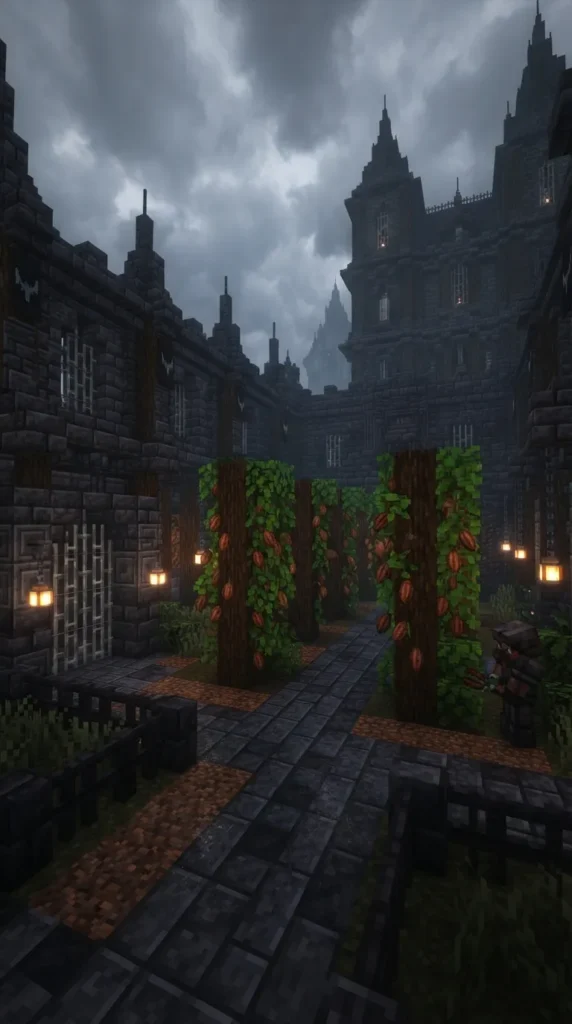
13. The Sorrowful Cryptic Cocoa Bean Courtyard
Introduction
Cocoa beans naturally demand jungle wood, but when paired with polished deepslate and iron fencing, they take on a striking gothic elegance. The Sorrowful Cryptic Cocoa Bean Courtyard suspends dark jungle logs between somber stone pillars, creating a vertical plantation of rich brown pods.
What This Idea Means
This design reimagines tropical crop cultivation through a northern gothic lens. It suggests an empire that spans distant climates, importing tropical luxuries and cultivating them within fortified, stone-walled European courtyards.
How to Make It
- Courtyard Perimeter: Construct an open-air courtyard measuring 11×11 blocks using Polished Deepslate Walls and Iron Bar gates.
- Jungle Pillar Grid: Erect vertical columns of Jungle Logs inside the courtyard in a 3×3 grid pattern.
- Planting Cocoa: Plant Cocoa Beans on all four sides of the jungle log pillars at multiple height levels.
- Stone Pathways: Lay down cracked and normal Deepslate Tile pathways beneath the pillars for easy harvesting access.
- Cryptic Details: Place a stone skull or weathered gravestone in the corner of the courtyard to reinforce the moody atmosphere.
Tips and Variations
- Variation: Use stripped jungle logs for a cleaner, more refined architectural pillar look.
- Tip: Harvest regularly and replant immediately to keep the vertical pillars completely covered in lush brown pods.
Materials Needed
- Polished Deepslate Walls (60)
- Jungle Logs (45)
- Cocoa Beans (36)
- Iron Bars (30)
- Deepslate Tiles (50)
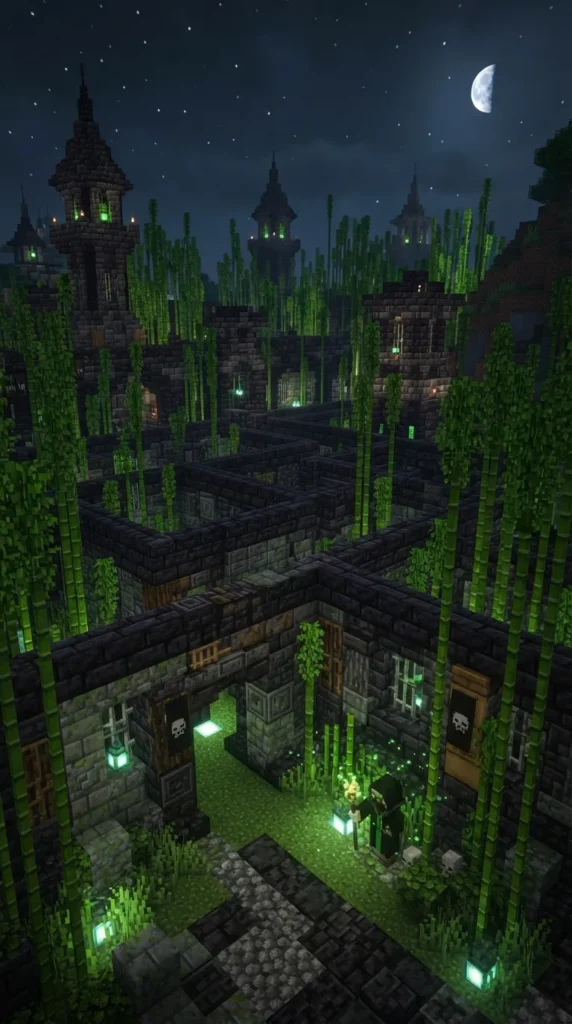
14. The Necromancer’s Bonsai & Bamboo Maze Farm
Introduction
Bamboo offers height and delicate vertical lines, which contrast brilliantly with heavy blackstone architecture. The Necromancer’s Bonsai & Bamboo Maze Farm features a winding, labyrinthine bamboo grove enclosed by jagged blackstone brick walls and ornate iron fencing.
What This Idea Means
This farm plays with scale and mystery. Walking through the tall, whispering bamboo stalks inside a gothic fortress enclosure creates a sense of suspense and discovery, turning a simple automated bamboo farm into an atmospheric puzzle garden.
How to Make It
- Labyrinth Layout: Outline a 15×15 maze perimeter using Polished Blackstone Bricks and Iron Bars.
- Bamboo Planting: Plant Bamboo densely throughout the interior pathways on dirt blocks, leaving narrow walking trails between stalks.
- Gothic Watchtowers: Build two small 3×3 watchtowers at opposite corners of the maze using deepslate roofs and iron fence windows.
- Underground Lighting: Bury sea lanterns beneath moss blocks in the pathways to cast an eerie green upward glow through the bamboo stalks.
- Gateway Entrance: Create a grand gothic arched iron gate as the sole entry point into the maze.
Tips and Variations
- Variation: Allow pandas or skeletons to roam inside the maze (if in creative mode or spawned via eggs) for living atmospheric detail.
- Tip: Harvest the upper segments of bamboo while leaving the base intact to maintain a consistent ceiling height.
Materials Needed
- Polished Blackstone Bricks (100)
- Iron Bars (64)
- Bamboo Stalks (120)
- Dirt Blocks (64)
- Deepslate Tiles (40)
- Sea Lanterns (8)


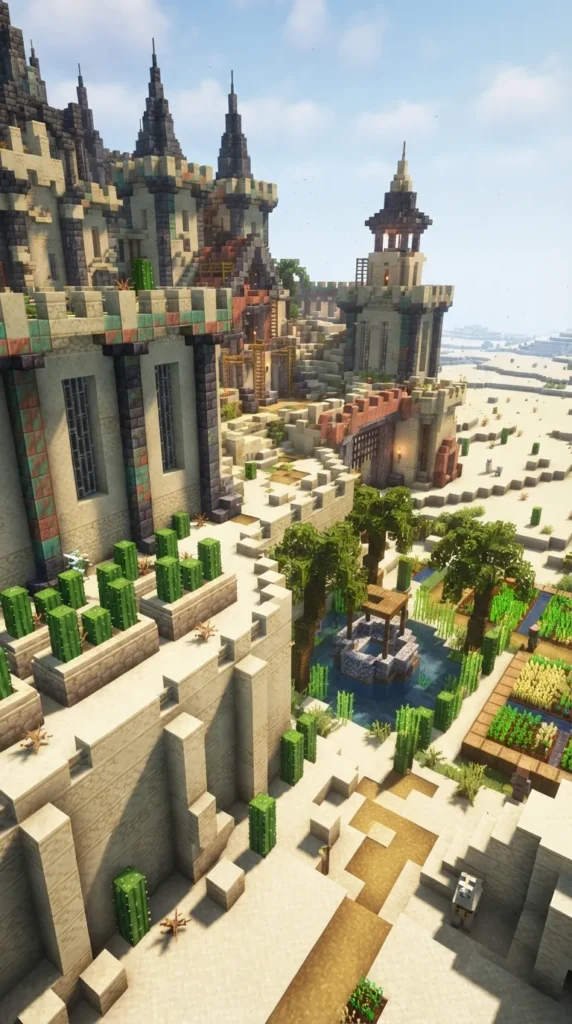
15. The Gilded Iron Cactus Desert Bastion
Introduction
Deserts can be harsh and unforgiving, but they also offer stunning palettes for gothic architecture. The Gilded Iron Cactus Desert Bastion uses cut copper, sandstone, iron bars, and thriving desert cactuses to create an imposing fortress outpost in arid wastelands.
What This Idea Means
This design represents the expansion of gothic empires into sun-baked desert frontiers. It showcases how cold iron and dark stone can anchor desert flora like cactuses into a structured, highly defenseless agricultural outpost.
How to Make It
- Bastion Foundation: Build a square fortification 13×13 blocks using Smooth Sandstone and Cut Copper blocks for oxidized contrast.
- Iron Bar Bastions: Construct high defensive walls interspersed with tall Iron Bar window slits.
- Cactus Planters: Build raised stone planter boxes filled with Sand, cultivating neat rows of Cactus blocks.
- Water Features: Include a central desert oasis well lined with deepslate and glowing lanterns.
- Arched Gatehouse: Build a commanding desert gatehouse featuring copper grates and iron trapdoors.
Tips and Variations
- Variation: Let the copper weather naturally to an oxidized turquoise green to match the cactus color palette.
- Tip: Surround cactus plots with fences to prevent players or mobs from accidentally colliding with them.
Materials Needed
- Smooth Sandstone (90)
- Cut Copper (40)
- Iron Bars (50)
- Sand Blocks (20)
- Cactus (12)
- Soul Lanterns (4)
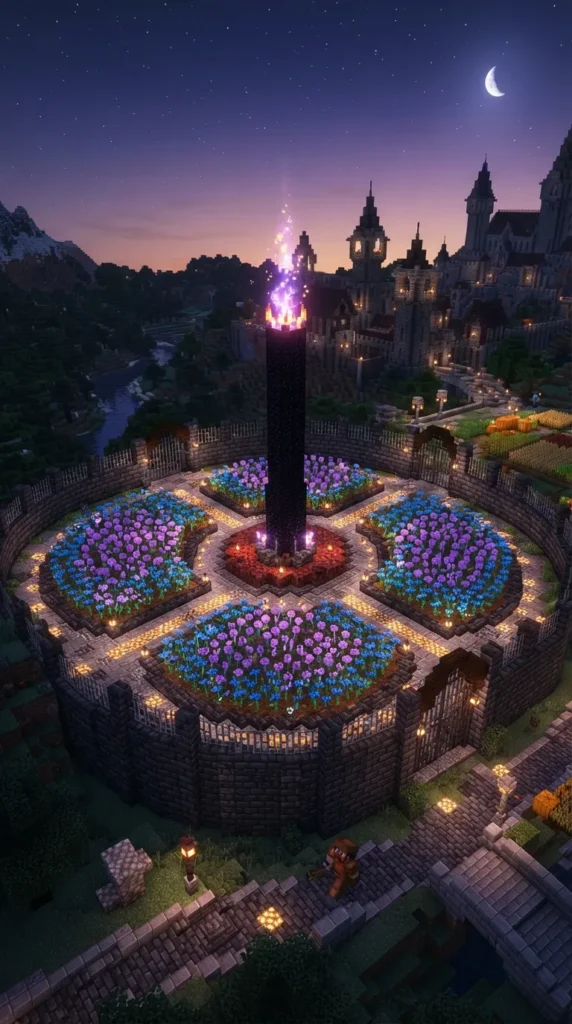
16. The Twilight Bellflower Chorus
Introduction
Flowers bring softness to stark architecture. The Twilight Bellflower Chorus is a lush floral farm featuring sweet berries, cornflowers, and alliums arranged in symmetrical medieval garden beds, surrounded by deepslate retaining walls and delicate iron fences.
What This Idea Means
This farm celebrates the melancholic beauty of twilight flora—flowers that bloom in shades of blue, purple, and silver. It serves as a sanctuary for potion brewers and botanical artists who require rare blossoms in vast quantities.
How to Make It
- Garden Beds: Lay out a circular garden layout 15 blocks in diameter, divided into wedge-shaped flower beds separated by stone pathways.
- Floral Variety: Plant Cornflowers, Alliums, Blue Orchids, and Sweet Berry Bushes in alternating color rings.
- Perimeter Wall: Encircle the circular garden with a low Deepslate Brick wall topped with continuous Iron Bars.
- Central Obelisk: Build a slender 11-block-tall gothic obelisk in the exact center using polished blackstone and a glowing lantern crown.
- Hanging Vistas: Suspend flower pots from iron chains around the perimeter arches.
Tips and Variations
- Variation: Use bone meal on grass surrounding the stone border to let natural tall grass and wild flowers creep in.
- Tip: Use a silk touch hoe or shears when harvesting specific decorative flowers to prevent loss.
Materials Needed
- Deepslate Bricks (80)
- Iron Bars (60)
- Cornflowers & Alliums (40)
- Sweet Berry Bushes (16)
- Polished Blackstone (30)
- Lanterns (4)
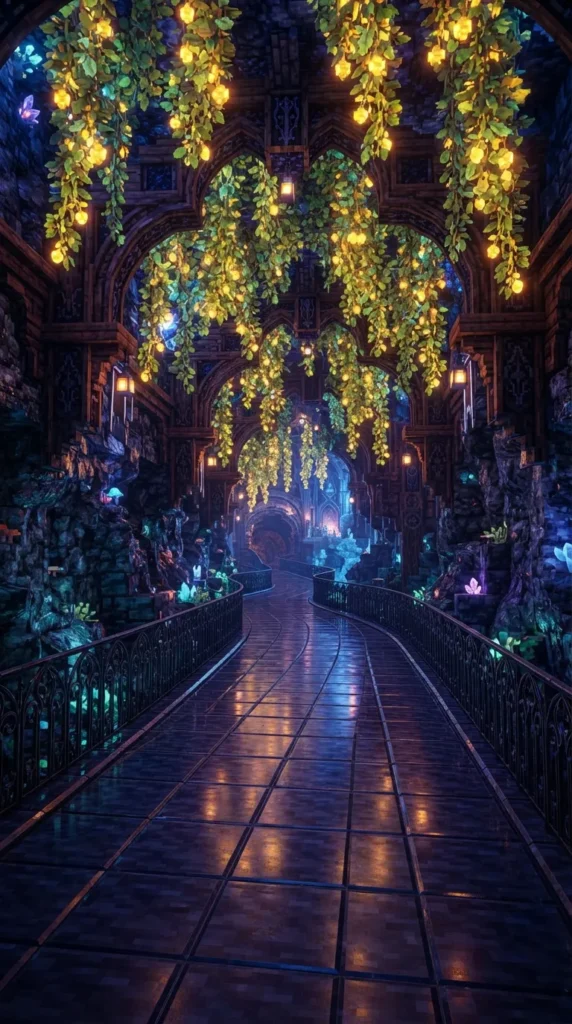
17. The Phantom-Gilded Glow Berry Arbor
Introduction
Bioluminescence is the gothic builder’s best friend. The Phantom-Gilded Glow Berry Arbor suspends golden-orange glowing berries from overhead dark oak trellises, creating a magical, shadowy arbor that produces endless food while casting a warm, eerie glow over stone pathways.
What This Idea Means
This concept captures the magic of enchanted twilight forests. It is an agricultural installation where food grows not from the dirt alone, but cascades down from vaulted timber ceilings like strings of glowing jewels.
How to Make It
- Arbor Structure: Construct a series of 5 parallel gothic arches spanning 11 blocks wide, made of Stripped Spruce Wood and Dark Oak Fences.
- Glow Berry Vine Suspension: Plant Cave Vines on the underside of the upper wooden beams and allow them to grow downward until they bear Glow Berries.
- Iron Boundary Railings: Run Iron Bars along the outer edges of the arbor walkway to form secure, elegant guardrails.
- Stone Pavement: Lay down polished deepslate and basalt tile flooring beneath the glowing canopy.
- Atmospheric Seating: Place stone stair benches along the inner pillars for contemplative resting spots.
Tips and Variations
- Variation: Shear the tips of the vines once they reach your desired height to stop them from growing further down.
- Tip: Combine glow berries with regular lanterns for a rich, multi-layered lighting scheme.
Materials Needed
- Stripped Spruce Logs (60)
- Dark Oak Fences (40)
- Cave Vines & Glow Berries (25)
- Iron Bars (48)
- Polished Deepslate (50)
18. The Gothic Cloister Sweet Berry Cloister
Introduction
Drawing inspiration from European monastery cloisters, this sweet berry farm places prickly berry bushes inside a tranquil, columned stone quadrangle protected by heavy wrought-iron security fences.
What This Idea Means
This design emphasizes patience, endurance, and quiet contemplation. Harvesting sweet berries from within a protected cloister transforms a mundane survival chore into a peaceful, rhythmic monastic ritual.
How to Make It
- Quadrangle Design: Build a square courtyard 15×15 blocks wide with a covered stone corridor around the perimeter supported by deepslate pillars.
- Central Berry Garden: In the open-air center of the courtyard, plant neat rows of Sweet Berry Bushes separated by cobblestone walking slabs.
- Iron Grille Walls: Replace exterior walls of the corridor with Iron Bars to maintain an open-air feel while securing the perimeter.
- Courtyard Well: Place a stone water well in one corner featuring a mossy bucket and chain.
- Climbing Vegetation: Let ivy and weeping vines drape down from the roofline over the stone arches.
Tips and Variations
- Variation: Use red nether brick accents for a more fiery, dramatic cloister color scheme.
- Tip: Harvest carefully from the outer edges of the bushes to avoid taking thorns damage.
Materials Needed
- Deepslate Bricks (100)
- Iron Bars (80)
- Sweet Berry Bushes (24)
- Cobblestone Slabs (40)
- Vines (15)
19. The Cathedral Arch Root Vegetable Sanctuary
Introduction
Carrots and potatoes deserve architectural majesty. The Cathedral Arch Root Vegetable Sanctuary houses subterranean-style crop beds beneath soaring gothic arches, stained glass accents, and intricate iron fencing.
What This Idea Means
This farm honors the staple foods of survival. By elevating root vegetable farming into a grand architectural cathedral, it highlights the dignity of sustenance and hard agricultural labor in a medieval world.
How to Make It
- Sanctuary Shell: Build a rectangular hall 11 blocks wide by 19 blocks long using Tuff Bricks and Polished Basalt.
- Cathedral Rib Vaults: Construct ribbed ceiling arches spanning the interior every 3 blocks using stair blocks.
- Iron Lattice Windows: Build tall gothic window openings filled with Iron Bars and tinted glass along both side walls.
- Tiered Crop Beds: Create deep, water-hydrated crop troughs running the length of the sanctuary, planted with alternating rows of carrots and potatoes.
- Grand Entrance: Construct a double-door gothic entryway flanked by stone gargoyle statues (crafted from carved pumpkins and stone stairs).
Tips and Variations
- Variation: Use copper grates on the floor for an industrial drainage trench effect.
- Tip: Add item frames with golden potatoes and carrots near the entrance as architectural signifiers.
Materials Needed
- Tuff Bricks (140)
- Polished Basalt (50)
- Iron Bars (64)
- Tinted Glass (32)
- Carrots & Potatoes (60)
- Farmland (60)
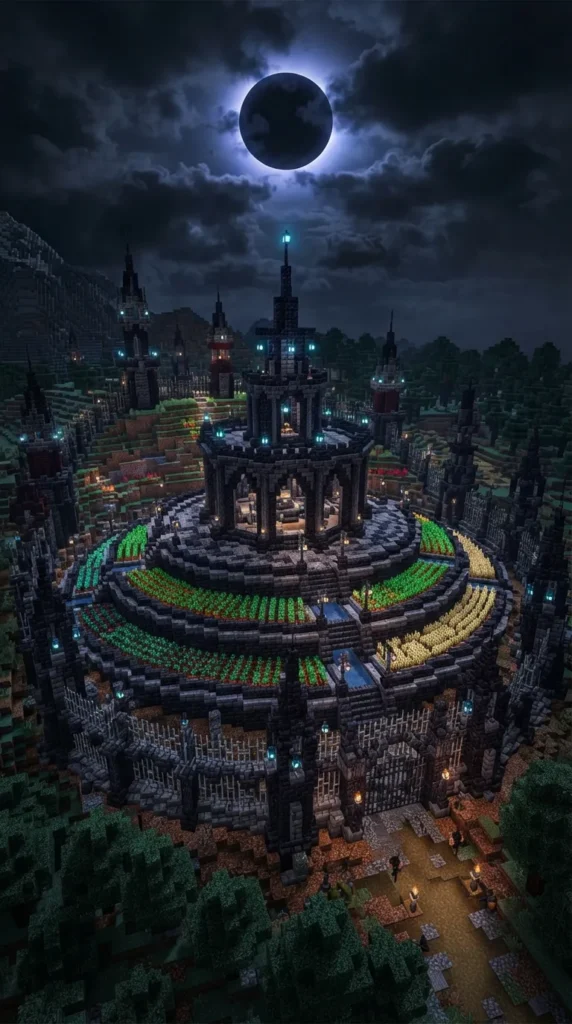
20. The Eternal Eclipse Farmstead
Introduction
The pinnacle of gothic agricultural design: The Eternal Eclipse Farmstead. Centered around a massive obsidian and polished blackstone pavilion, this multi-tier farm grows all major crops under a permanent architectural eclipse motif, secured by heavy iron gates and shadowy spires.
What This Idea Means
This masterwork represents ultimate mastery over nature and environment in Minecraft. It is a grand estate farm built for megabuilders who want a dramatic, dark fantasy centerpiece that ties together wheat, carrots, potatoes, beetroots, and berries into a unified architectural triumph.
How to Make It
- Eclipse Pavilion Base: Build a circular or octagonal pavilion 21 blocks in diameter using Polished Blackstone Bricks and Obsidian.
- Multi-Tier Planting Rings: Construct concentric circular farming terraces stepping upward toward a central obsidian sun-dial sculpture.
- Perimeter Wrought-Iron Fence: Enclose the entire farmstead with a towering gothic iron fence made of Iron Bars and Blackstone Walls.
- Four Corner Spires: Erect four 15-block-tall gothic spires at the cardinal points, each topped with soul lanterns and iron spikes.
- Central Water Feature: At the core of the concentric rings, place a dark water fountain that cascades downward to hydrate all surrounding tiers.
Tips and Variations
- Variation: Use tinted glass spheres suspended above the pavilion to represent moons or eclipses.
- Tip: Light the interior carefully with hidden light sources to prevent mob spawns while preserving the deep gothic shadows.
Materials Needed
- Polished Blackstone Bricks (250)
- Obsidian Blocks (60)
- Iron Bars (120)
- Farmland & All Crop Types (100)
- Soul Lanterns (16)
- Water Buckets (8)


