5. Recycled Botanical Deckle-Edge Paper Making
What This Idea Means
Papermaking transforms mundane household paper waste—like unprinted packaging cardboard, school notes, egg cartons, and discarded kraft paper—into luxurious, textured, deckle-edge artisan stationery. This project teaches the principles of sustainable recycling while letting you experiment with tactile additives like crushed seeds, dried rose petals, and gold leaf flakes.
What You Need to Make It
- Discarded clean paper scrap (kraft paper, drawing paper, plain scrap prints, egg cartons)
- A paper making mould and deckle (a fine mesh screen stretched over a wooden frame)
- High-powered kitchen blender (reserved for crafting)
- A large, deep plastic storage bin or shallow water trough
- Cotton couching sheets, wool felts, or smooth cellulose cleaning cloths
- Natural additions: dried lavender seeds, wild marigold flakes, whole chamomile, or thread scraps
- Sponge and a flat rolling pin
Step-by-Step Instructions
- Shredding and Soaking: Tear scrap paper into small 1-inch squares. Fill a large bowl with the paper scraps and submerge them in warm water for at least 3 to 4 hours (or overnight) until the fibers soften completely.
- Blending Pulp: Fill your blender three-quarters full of warm water and add a handful of soaked paper shreds. Blend on low speed for 30 to 45 seconds until you have a smooth, oatmeal-like pulp with no visible paper chunks.
- Preparing the Vat: Pour the pulp slurry into your large plastic bin filled with 4 to 5 inches of lukewarm water. Stir with your hands to distribute the pulp evenly throughout the water.
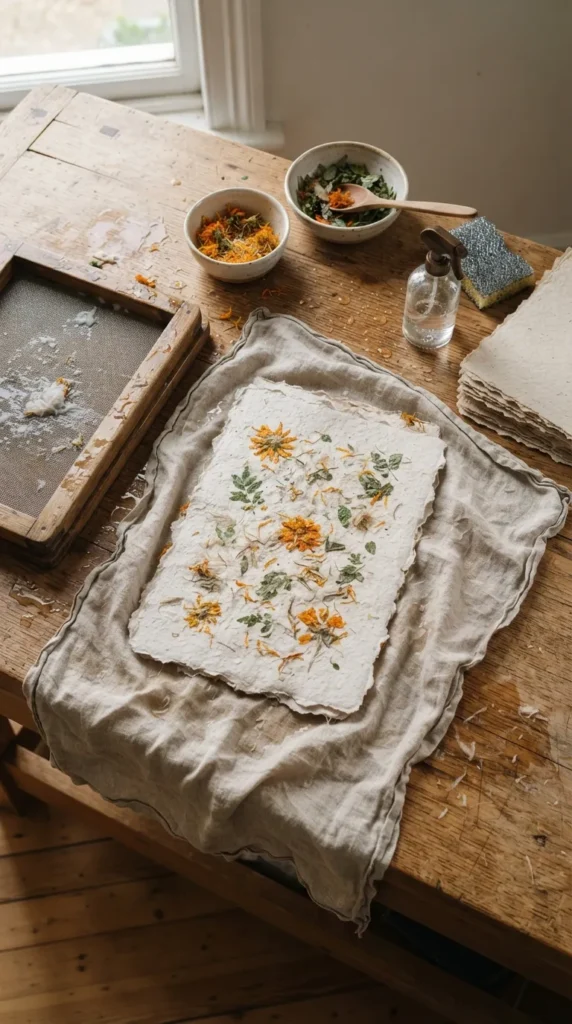
- Adding Botanicals: Scatter dried calendula petals, fern fronds, or dried tea leaves directly into the watery pulp vat, gently swirling to mix.
- Pulling the Sheet: Hold the mould (screen facing up) and the deckle (open frame on top) firmly together. Dip the frame vertically into the far side of the vat, scoop down to the bottom, and bring it up horizontally through the pulp. Give the frame a gentle side-to-side shake as it emerges to intertwine the paper fibers.
- Draining and Couching: Hold the screen level over the vat until the water stops dripping. Remove the top deckle frame. Flip the wet mesh screen face-down onto a damp cotton couching cloth in one smooth, confident rolling motion.
- Pressing and Drying: Press a sponge firmly against the back of the mesh screen to absorb excess water. Carefully lift the screen away, leaving the damp paper sheet on the cloth. Cover with another cloth, roll over it with a rolling pin to squeeze out remaining moisture, and leave the sheets to dry completely on flat boards for 24 hours.
Tips and Variations
- Plantable Seed Paper: Mix non-GMO wildflower seeds into the pulp vat after blending (blending will chop the seeds). Once the paper is used for notes, it can be planted directly into garden soil to grow live blossoms.
- Natural Botanical Dyeing: Add the boiled water from red cabbage, avocado pits, or onion skins to the pulp vat to dye the paper soft lavender, dusty blush pink, or warm terracotta without synthetic chemicals.
- Envelope Calligraphy Sets: Mold paper using smaller 4×6 inch frames to create custom postcard and envelope sets finished with wax seal stamps.