Creating a calm, high-end living space does not require spending thousands of dollars on luxury interior furnishings. The beauty of organic room decor lies in its root connection to nature, using raw textures, tactile materials, and earthy tones that bring peace and grounding energy into your home. By taking control of the creative process yourself, you can handcraft stunning aesthetic pieces on a strict budget, giving discarded, natural, or affordable raw materials a sophisticated new life.
Below are 20 unique, realistic, and budget-friendly DIY organic room decor ideas designed to transform your bedroom or living space into a warm, cozy sanctuary.
1. Sculptural Dried Botanical Clay Vases
Idea Overview
Sculptural air-dry clay vases with integrated botanical impressions bring an artisan, gallery-inspired feel to your open shelving or nightstand. This project focuses on using low-cost air-dry clay wrapped around upcycled glass jars or bottles, imprinted with delicate dried ferns, lavender, or eucalyptus sprigs before drying. The result is a tactile, earthy vessel that looks like high-end handcrafted studio pottery.
Materials Needed
- Upcycled glass bottles or jars
- White or terracotta air-dry clay
- A rolling pin
- Fresh or dried leaves and flowers (ferns, eucalyptus, or wildflowers)
- Sandpaper (medium and fine grit)
- Matte acrylic varnish or sealant
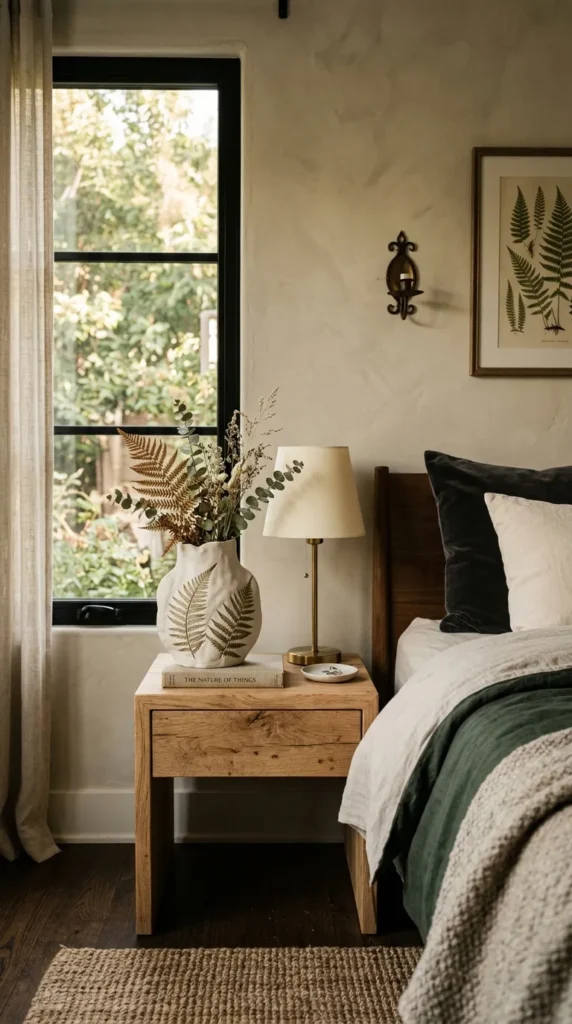
Step-by-Step Instructions
- Clean your upcycled glass jar thoroughly and dry it completely.
- Roll out a portion of air-dry clay on a clean surface until it is roughly a quarter-inch thick.
- Lay your chosen botanical stems onto the flat clay. Use the rolling pin to press them firmly into the surface, creating a clear impression, then carefully lift the plants away.
- Carefully wrap the textured clay slab around the glass jar, trimming off any excess edges with a craft knife.
- Smooth the seam at the back using a few drops of water on your fingertips.
- Let the vase dry completely for 24 to 48 hours away from direct heat to prevent cracking.
- Once fully set, gently sand any rough edges and apply two coats of matte varnish to seal the surface.
Tips & Variations
- Tip: If small micro-cracks form while drying, smooth a tiny bit of fresh clay wet with water into the crack and let it re-dry.
- Variation: Leave the clay unpainted for a raw, chalky organic finish, or apply a gentle wash of thinned-out beige acrylic paint to highlight the deep plant indentations.